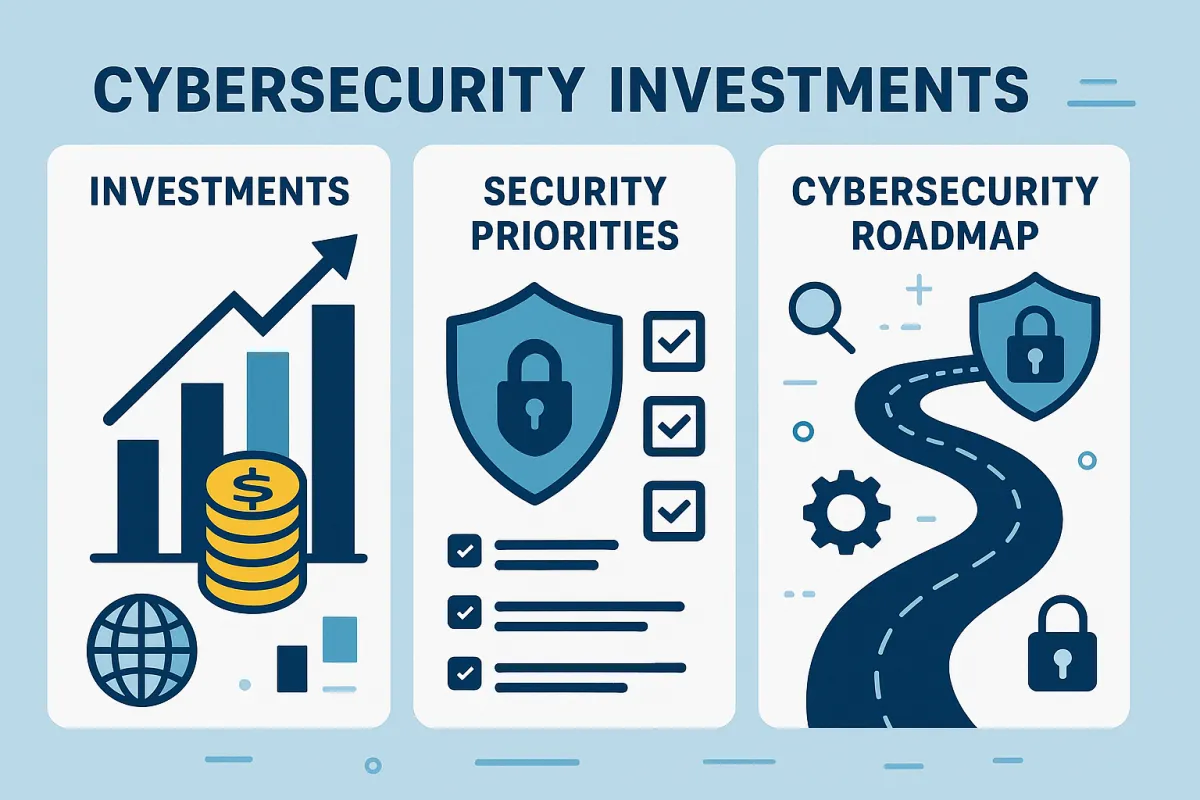
How to Prioritize Cybersecurity Investments
How to Prioritize Cybersecurity Investments
For small and medium-sized businesses (SMBs), cybersecurity is no longer a “nice to have”—it’s a necessity. With limited resources and an evolving threat landscape, knowing how to prioritize cybersecurity investments is crucial. This guide provides a practical framework to help you identify which projects deserve attention and budget, ensuring your business is protected against the most pressing risks.
Why Prioritizing Cybersecurity Investments Matters
Not all cybersecurity projects offer the same level of protection or ROI. Investing in the wrong areas can leave your business vulnerable while wasting precious resources. By creating a cybersecurity roadmap and focusing on security priorities that align with your business’s unique needs, you maximize your protection and efficiency.
A Framework for Prioritizing Cybersecurity Projects
1. Assess Your Current Security Posture
- Conduct a risk assessment: Identify assets, threats, and vulnerabilities. Tools like the CIS Controls can guide you through this process.
- Review recent incidents: Analyze past security events for patterns or recurring weaknesses.
- Map regulatory requirements: Ensure you know which compliance standards (GDPR, HIPAA, etc.) apply to your business.
2. Identify and Rank Your Key Assets
- Catalog critical data and systems: List what drives your business—customer data, intellectual property, financial systems, etc.
- Evaluate business impact: Consider the operational, financial, and reputational damage if each asset were compromised.
3. Map Threats to Business Impact
- Review threat intelligence: Stay updated on attacks in your industry. Resources like CISA’s vulnerability catalog can help.
- Estimate likelihood and impact: Rate how probable each threat is and what the consequences would be.
4. Evaluate Existing Controls
- Assess effectiveness: Are your current protections (firewalls, endpoint security, MFA, backups) properly configured and maintained?
- Look for gaps: Identify where controls are missing or outdated.
5. Prioritize Projects Using a Risk-Based Approach
- Score projects: Assign each potential investment a score based on risk reduction, cost, business impact, and compliance needs.
- Start with high-impact, low-effort wins: For SMBs, projects like enabling MFA or patching critical systems often provide strong protection for minimal investment.
Sample Cybersecurity Investment Checklist
- ✔️ Complete a risk assessment
- ✔️ Identify critical business assets
- ✔️ Review regulatory and contractual obligations
- ✔️ Evaluate existing security controls
- ✔️ Rank potential projects by risk reduction and cost
- ✔️ Develop a 6-12 month cybersecurity roadmap
- ✔️ Assign responsible owners for each initiative
- ✔️ Schedule regular reviews and updates
Examples of High-Value Security Initiatives for SMBs
- Multi-factor authentication (MFA): Rapidly reduces the risk of account takeover attacks.
- Employee security awareness training: Mitigates phishing and social engineering risks.
- Regular patch management: Closes known vulnerabilities in software and systems.
- Automated cloud backups: Protects against ransomware and accidental data loss.
- Endpoint protection: Monitors devices for malware and suspicious activity.
Building Your Cybersecurity Roadmap
With priorities defined, translate your findings into a clear cybersecurity roadmap:
- Set short, medium, and long-term goals: For example, “Enable MFA for all users in Q1,” “Implement quarterly phishing simulations in Q2.”
- Allocate budgets and resources: Assign funding and responsible owners to each project.
- Monitor progress: Use metrics—such as percentage of systems patched or users trained—to track improvement.
- Review and adapt: Revisit your roadmap quarterly to account for new threats or business changes.
For more practical guides and SMB security strategies, visit the Future Proof Labs Blog.
Frequently Asked Questions
- What is the most cost-effective first cybersecurity investment?
- Multi-factor authentication (MFA) is often the highest-impact, lowest-cost measure for SMBs, drastically reducing the risk of account compromise.
- How often should a business update its cybersecurity priorities?
- Review security priorities at least quarterly or whenever there are significant business or technology changes.
- Is compliance the same as security?
- No—compliance ensures you meet legal requirements, but effective security goes beyond compliance to address real-world threats and protect your business assets.
- How can I measure the ROI of cybersecurity investments?
- Track metrics such as incident reduction, downtime avoided, and compliance fines prevented. Prioritize projects that offer measurable risk reduction relative to their cost.
- Where can I find more resources on SMB cybersecurity?
- Sources like the SBA Cybersecurity Guide and the Future Proof Labs Blog offer actionable advice for SMBs.
Take the Next Step
Prioritizing cybersecurity investments doesn’t have to be overwhelming. By following a structured, risk-based approach, your business can address the most critical risks first and build a sustainable cybersecurity roadmap. For tailored insights and SMB-friendly security tools, explore what Future Proof Labs has to offer and stay ahead of evolving threats.


