How Applied AI Differs From Experimental AI
How Applied AI Differs From Experimental AI
Understanding the Divide: Applied AI vs. Experimental AI
The rapid evolution of artificial intelligence has created two distinct streams: applied AI and experimental AI. For small and medium business (SMB) operators and founders, understanding the difference is crucial. Misunderstandings here can lead to wasted resources or missed opportunities for operational excellence and growth.
Defining Applied AI
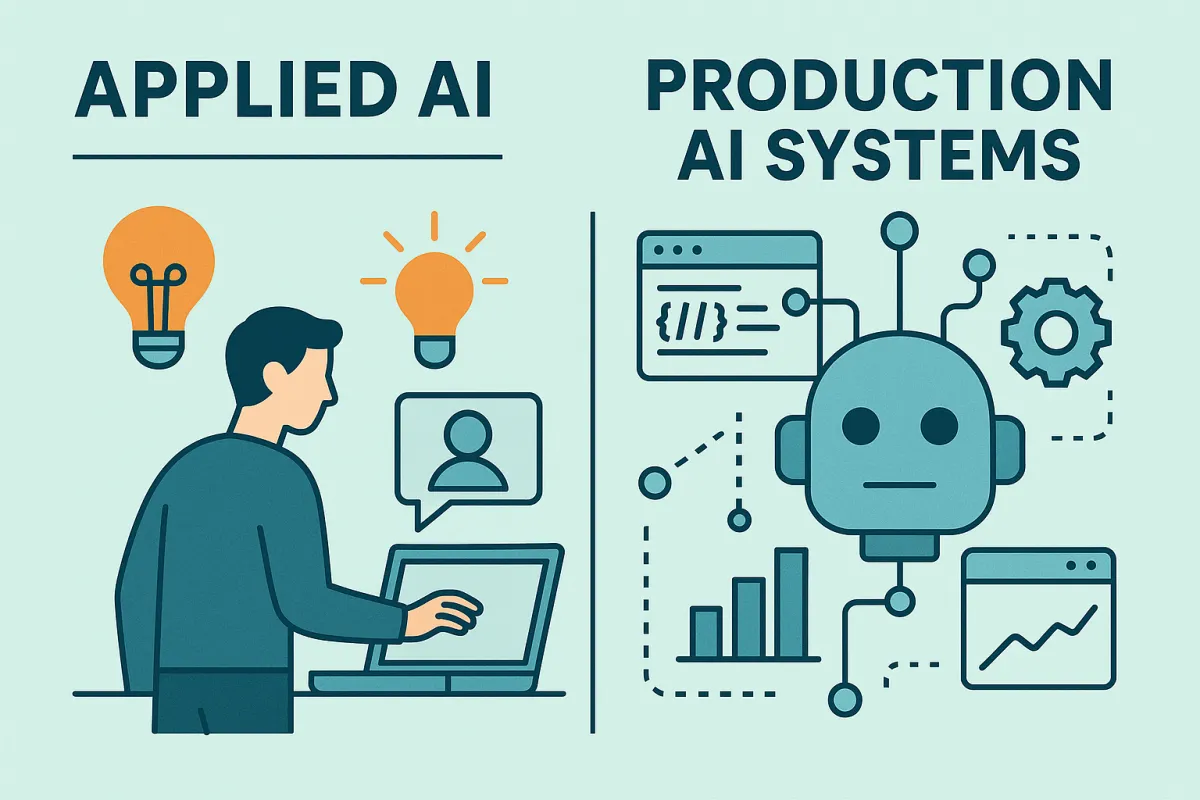
Applied AI refers to artificial intelligence systems that are developed, deployed, and maintained for real-world business use. These production AI systems are integrated into workflows and processes, delivering tangible business value—often automating tasks, optimizing operations, or enhancing decision-making in measurable ways.
Defining Experimental AI
Experimental AI is about exploring, prototyping, and testing new algorithms, models, or AI concepts—often in controlled or academic environments. The primary focus is on research, feasibility, and learning, not immediate business impact. Experimental AI may never leave the lab or may require significant adaptation before production use.
Key Differences Between Applied and Experimental AI
- Purpose: Applied AI is solution-focused and designed for operational use; experimental AI is research-focused and designed for exploration and learning.
- Deployment: Applied AI is deployed in production environments; experimental AI remains in test environments or sandboxes.
- Reliability: Applied AI systems are robust, reliable, and scalable; experimental AI may be unstable or unoptimized.
- Business Value: Applied AI delivers measurable ROI; experimental AI’s value is in learning, discovery, and future potential.
- Regulation & Compliance: Applied AI must meet security, privacy, and compliance requirements; experimental AI may not.
Examples: Applied AI vs. Experimental AI in Business
Applied AI Examples
- Customer Support Automation: AI chatbots answering customer queries on a live website.
- Predictive Maintenance: AI systems forecasting equipment failures in manufacturing.
- Personalized Marketing: AI-driven recommendation engines on e-commerce platforms.
Experimental AI Examples
- Cutting-edge NLP Models: Testing novel language models with unproven architectures.
- Exploratory Computer Vision: Prototyping AI that attempts to interpret obscure visual data with limited datasets.
- Unsupervised Learning Algorithms: Researching new ways for AI to find patterns in data without labels.
Why the Distinction Matters for SMBs
Knowing the difference between applied and experimental AI helps SMBs make informed investments. Applied AI is ready to solve your business problems today, while experimental AI represents future possibilities. For operators, focusing on production AI systems that align with immediate business needs is key to maximizing ROI and minimizing risk.
Practical Steps to Move from Experimental to Applied AI
- Identify Business Needs: Start by mapping out operational pain points that AI could address.
- Evaluate AI Readiness: Assess if your existing data and infrastructure support AI deployment.
- Prototype Carefully: Experiment in a sandbox using real data, but with controlled risk.
- Pilot in a Controlled Environment: Roll out the AI solution to a limited segment of your business to gather results and feedback.
- Measure Impact: Define KPIs and monitor performance against business objectives.
- Scale with Confidence: Once proven, deploy the AI system across the business, ensuring compliance and ongoing monitoring.
Checklist: Is Your AI Project Ready for Production?
- Clear business problem and success metrics defined
- Robust, clean, and relevant data available
- AI model tested for accuracy, reliability, and scalability
- Regulatory and compliance checks completed
- Stakeholders trained and processes updated
- Ongoing monitoring and support plan in place
Common Pitfalls When Moving from Experimental to Applied AI
- Underestimating Data Needs: Experimental models may work on small, curated datasets, but production requires robust data pipelines.
- Ignoring Scalability: A prototype might perform well at a small scale but fail under production loads.
- Lack of Monitoring: Applied AI needs continuous monitoring to ensure performance and compliance.
- Overlooking Stakeholder Buy-in: Operational AI often changes workflows, requiring staff training and clear communication.
FAQ: Applied AI vs. Experimental AI
- Is experimental AI ever used in production?
- Experimental AI can transition to production, but only after thorough validation, adaptation, and meeting compliance standards.
- What are the risks of deploying experimental AI in a business environment?
- Unproven models may lead to unreliable performance, security vulnerabilities, and regulatory breaches.
- How can SMBs identify the right time to move from experimental to applied AI?
- When an AI solution consistently meets business KPIs, passes stress and compliance tests, and earns stakeholder trust, it is ready for production.
- Do applied AI systems require ongoing maintenance?
- Yes. Production AI must be monitored, updated, and retrained as business needs and data evolve.
- Are there standard frameworks to guide the transition from experimental to applied AI?
- Yes, resources from organizations like NIST's AI Risk Management Framework offer best practices for responsible AI deployment.
Further Reading
- Learn more about operationalizing AI in SMBs on the Future Proof Labs Blog.
- For an in-depth look at AI maturity, see McKinsey's State of AI report.
Conclusion: Make AI Work for Your Business
Understanding the difference between applied and experimental AI empowers SMB founders and operators to make smarter, faster, and more sustainable technology decisions. By focusing on production AI systems that drive real business value, you can future-proof your operations and stay ahead in a rapidly evolving market. For expert guidance on integrating applied AI into your business, explore resources and solutions from Future Proof Labs.


