What Is an AI Operating Model for Modern Businesses?
What Is an AI Operating Model for Modern Businesses?
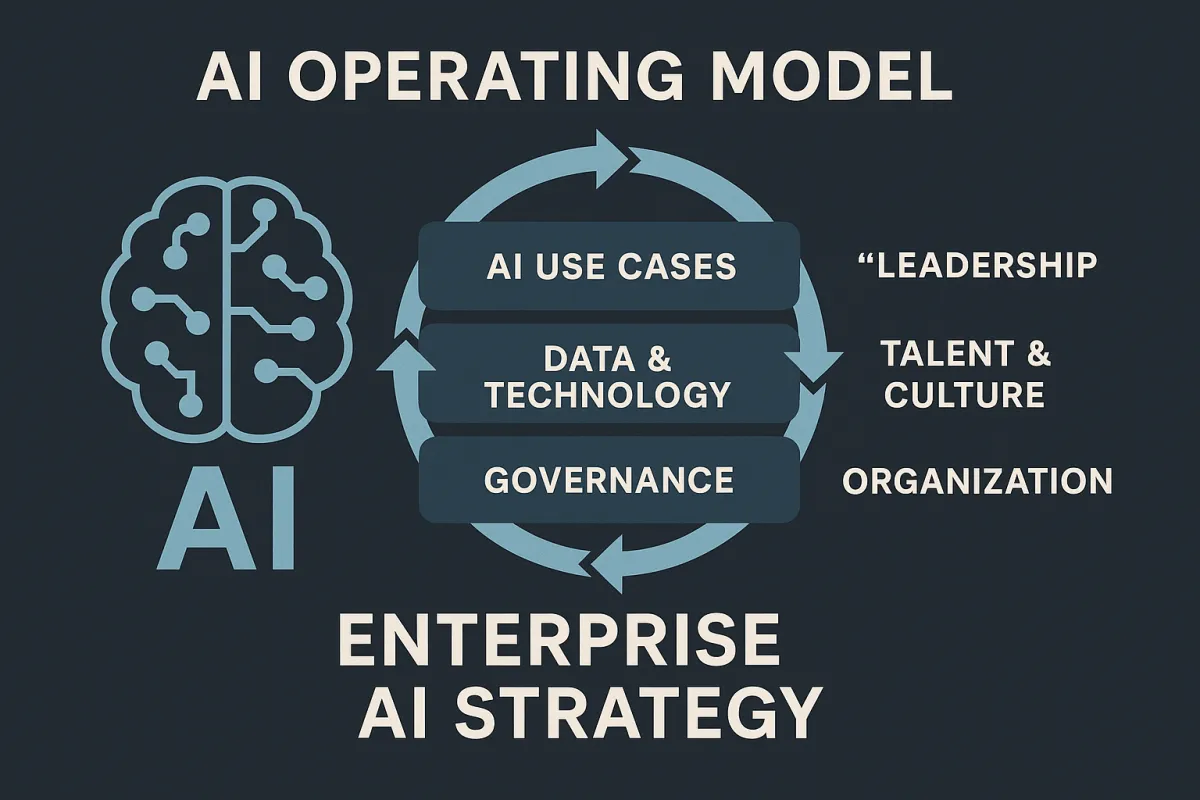
The rapid rise of artificial intelligence (AI) is redefining how organizations operate, make decisions, and deliver value. For modern businesses, adopting AI is no longer a technical experiment—it’s a strategic imperative. To realize tangible ROI and scale responsibly, companies must architect an AI operating model that aligns technology, people, and processes. This article demystifies the AI operating model, explains how it supports enterprise AI strategy, and provides actionable steps to build one that drives results.
Defining the AI Operating Model
An AI operating model is a comprehensive framework that guides how businesses embed AI into their operations, culture, and decision-making. It encompasses governance, technology tooling, workflows, and the organizational structures needed to manage AI at scale. Unlike ad-hoc AI deployments, an operating model gives teams clarity, accountability, and repeatable processes for launching and maintaining AI solutions.
Key components of a robust AI operating model include:
- Governance: Policies, roles, and oversight to ensure responsible and ethical AI use.
- Tooling: The platforms, frameworks, and infrastructure supporting AI development and deployment.
- Workflows: Standardized, cross-functional processes for model lifecycle management.
- Decision Frameworks: Mechanisms for integrating AI insights into business decisions and measuring impact.
How the AI Operating Model Powers Enterprise AI Strategy
Enterprise AI strategy sets the vision and priorities for leveraging AI across the organization. The AI operating model is the execution layer—it translates strategy into actionable routines and ensures that AI investments align with business goals.
- Scalability: With standardized workflows and reusable tools, teams can accelerate AI adoption across business units.
- Risk Mitigation: Clear governance and ethical guidelines help manage compliance, privacy, and bias risks (World Economic Forum).
- Value Realization: Decision-making frameworks ensure that AI delivers measurable outcomes, not just technical outputs.
- Continuous Improvement: Feedback loops and performance tracking allow for iterative enhancements to models and processes.
Structuring Governance for AI
Effective governance is central to any AI operating model. It provides the guardrails for responsible AI use and aligns initiatives with company values and regulatory requirements. Governance structures typically involve:
- AI Steering Committees: Cross-functional teams that set priorities, review risks, and monitor compliance.
- Ethical Guidelines: Principles that govern data use, model transparency, and accountability.
- Role Definition: Clearly assigned responsibilities for model owners, data stewards, and compliance leads.
For example, a retail enterprise might establish an AI Ethics Board to review new personalization algorithms and ensure they do not reinforce bias or privacy breaches (Harvard Business Review).
Tooling: Building the Right AI Tech Stack
AI tooling refers to the platforms, frameworks, and infrastructure that support the end-to-end AI lifecycle. A mature AI operating model defines the tools for:
- Data Management: Secure data lakes, data labeling tools, and data quality monitoring systems.
- Model Development: Machine learning platforms (e.g., TensorFlow, PyTorch), AutoML tools, and collaborative environments for data scientists.
- Deployment & Monitoring: Model serving infrastructure, CI/CD pipelines, and tools for tracking model drift and performance.
Standardizing on a core set of tools reduces duplication, streamlines onboarding, and accelerates time-to-value for new AI projects.
Workflows: Operationalizing AI Across Teams
Workflows define how AI projects move from ideation to production and maintenance. Key considerations include:
- Project Intake: How business units propose, scope, and prioritize new AI initiatives.
- Cross-Functional Collaboration: Defining hand-offs between data engineers, data scientists, IT, and business stakeholders.
- Model Lifecycle Management: Processes for development, validation, deployment, monitoring, and retraining.
For example, a financial services company may use a centralized AI project intake portal to standardize how teams request and fund new models, ensuring alignment with business strategy.
Decision Frameworks: Making AI Work for the Business
AI models are only valuable when their insights are integrated into business decisions. An effective operating model establishes:
- Decision Rights: Who is authorized to act on AI-driven recommendations.
- Success Metrics: KPIs and dashboards that measure the impact of AI on business outcomes.
- Feedback Loops: Mechanisms for learning from model outputs and refining processes.
For instance, a logistics firm might embed AI-driven demand forecasts into weekly planning meetings, while continuously tracking forecast accuracy and ROI.
Checklist: Building Your AI Operating Model
- Define AI governance structure and assign roles
- Develop ethical AI guidelines and compliance processes
- Standardize on core AI tooling and infrastructure
- Document end-to-end AI workflows across teams
- Establish clear decision-making frameworks and KPIs
- Implement feedback loops for continuous improvement
- Educate and upskill employees on AI best practices
Examples of AI Operating Models in Action
Retail Sector
A global retailer deploys a centralized AI platform, governed by a steering committee, with standardized workflows for campaign optimization, inventory forecasting, and customer personalization. All AI projects are tracked with business KPIs and ethical guidelines.
Manufacturing
A manufacturing company establishes a cross-functional AI task force to manage predictive maintenance models. The team uses shared tooling for data ingestion and model monitoring, with clear roles for plant managers and data scientists.
Healthcare
A healthcare provider creates an AI governance board to oversee clinical decision support systems, ensuring compliance with patient privacy laws and continuous model validation.
FAQ: AI Operating Models for Businesses
- What is the difference between an AI strategy and an AI operating model?
- An AI strategy sets the vision and goals for AI use, while the operating model defines the practical structures, processes, and tools to implement and sustain that strategy.
- Why is governance critical in an AI operating model?
- Governance ensures AI is used responsibly, ethically, and in compliance with regulations, reducing risks such as bias and data breaches.
- How can a business standardize AI tooling?
- By selecting and documenting preferred platforms and frameworks, providing onboarding resources, and mandating their use across teams.
- What role do workflows play in AI adoption?
- Workflows streamline project delivery, improve collaboration, and ensure repeatable, scalable AI deployments.
- How do decision frameworks help measure AI impact?
- They connect AI outputs to business KPIs, enabling organizations to track ROI and continuously refine their AI initiatives.
Start Future-Proofing Your Business
Building an effective AI operating model unlocks sustainable value from AI investments and positions your business for future growth. For more practical guides and AI adoption strategies, explore the Future Proof Labs blog. To accelerate your journey and ensure your AI operating model delivers, reach out to Future Proof Labs—your partner in enterprise AI strategy and transformation.


