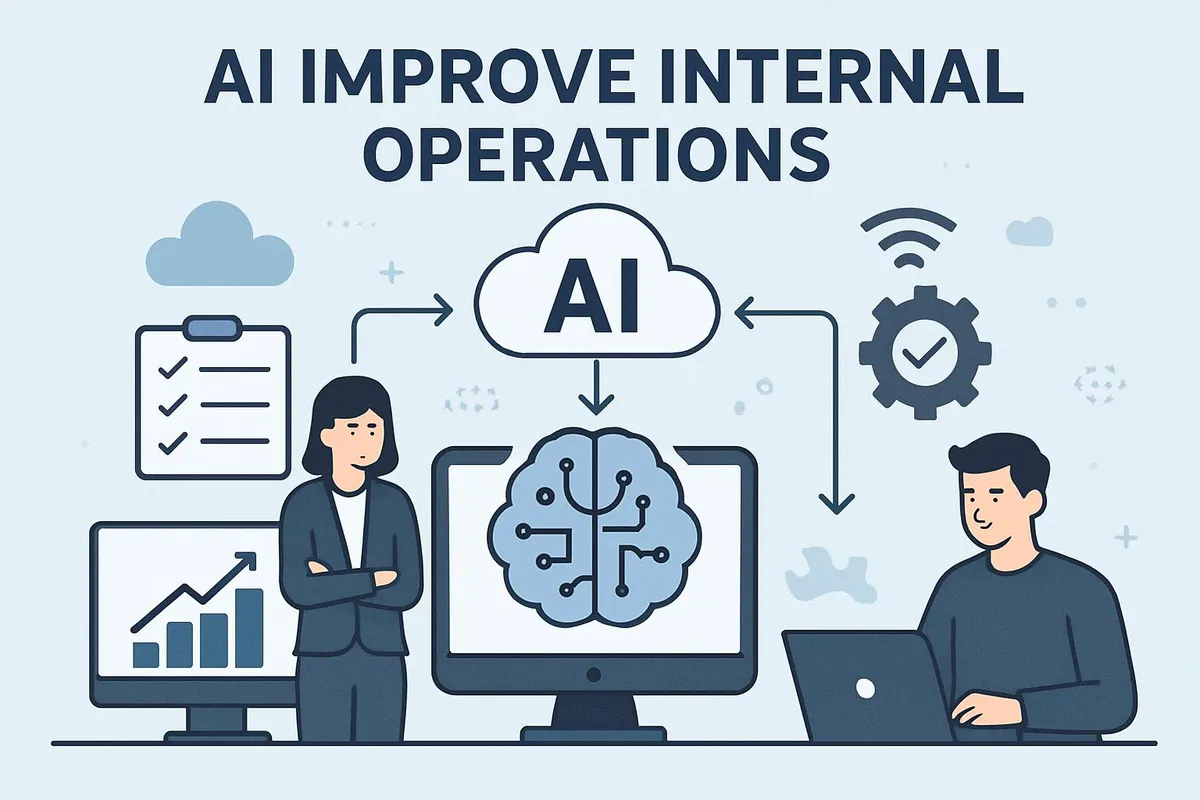
9 Ways AI Can Improve Internal Operations This Year
9 Ways AI Can Improve Internal Operations This Year
Artificial intelligence (AI) is no longer a futuristic concept reserved for tech giants. Today, SMBs and growth-focused companies can tap into AI to improve internal operations, cut costs, and boost efficiency—without heavy investment or technical expertise. Here are nine practical ways you can leverage AI automation across core business functions this year.
1. Streamline Customer Support With AI Chatbots
AI-powered chatbots can handle common customer queries, freeing up your team for higher-level tasks. Modern solutions integrate with your website or helpdesk, providing instant responses 24/7, reducing wait times, and gathering valuable customer data.
- Example: Deploy a chatbot on your FAQ or support page to answer routine questions and escalate complex issues to human agents.
- Practical Step: Start with out-of-the-box tools like Intercom or Zendesk AI add-ons for rapid setup.
2. Automate Data Entry and Processing
Manual data entry is tedious and error-prone. AI-powered document processing tools extract, validate, and organize data from invoices, receipts, and forms automatically—saving time and improving accuracy.
- Example: Use AI to scan and upload invoices directly into your accounting software.
- Practical Step: Explore tools like ABBYY FlexiCapture or Microsoft Power Automate for document AI integration.
3. Enhance Employee Onboarding and Training
AI-driven learning platforms personalize onboarding, assess knowledge gaps, and recommend tailored content to new hires. This accelerates training and ensures consistency across your team.
- Example: Implement AI-based training modules that adapt to each employee’s learning speed and style.
- Practical Step: Try platforms like Docebo or LearnUpon with built-in AI features to deliver adaptive learning experiences.
4. Improve Internal Communications
AI can analyze communication patterns in emails, chats, or project management tools to identify bottlenecks and recommend improvements. It can also automate meeting scheduling and summarize discussions.
- Example: Use AI assistants to auto-schedule meetings based on calendar availability and summarize key action points after calls.
- Practical Step: Integrate AI tools like Otter.ai for real-time transcription and summary or use an AI scheduling assistant.
5. Optimize Inventory and Supply Chain Management
AI predictive analytics help anticipate demand, optimize stock levels, and reduce overstock or stockouts. This leads to better cash flow and customer satisfaction.
- Example: Use AI to forecast inventory needs based on historical sales and market trends.
- Practical Step: Implement predictive analytics modules in your inventory management system or connect with platforms like NetSuite or SAP.
6. Accelerate Financial Reporting and Forecasting
AI can automate reconciliation, detect anomalies, and generate real-time financial reports, making monthly closes faster and more accurate.
- Example: Deploy AI tools to flag unusual transactions and auto-categorize expenses in your accounting system.
- Practical Step: Use accounting platforms with AI features, such as QuickBooks with machine learning-powered expense categorization.
7. Strengthen Cybersecurity and Compliance
AI monitors systems for suspicious activity, automates threat detection, and helps maintain regulatory compliance through continuous monitoring and alerts.
- Example: Enable AI-based security tools to scan for vulnerabilities and unauthorized access attempts in real time.
- Practical Step: Leverage solutions like CrowdStrike or Microsoft Defender for automated, AI-driven security management.
8. Refine Recruitment and Talent Management
AI streamlines candidate screening, matches applicants to job requirements, and predicts employee retention risks—shortening hiring cycles and improving fit.
- Example: Use AI to scan resumes and highlight top candidates based on predefined criteria.
- Practical Step: Integrate AI recruitment tools such as Lever or Greenhouse for smarter hiring workflows.
9. Boost Marketing and Sales Productivity
AI supports your marketing and sales team by scoring leads, personalizing campaigns, and automating repetitive outreach, ensuring more time for high-impact activities.
- Example: Deploy AI to segment your audience and suggest targeted content or offers.
- Practical Step: Try platforms like HubSpot or Salesforce Einstein for AI-powered lead scoring and automation.
Internal Operations AI Implementation Checklist
- Identify repetitive processes or bottlenecks in your workflow.
- Prioritize areas with high impact and relatively low technical complexity.
- Research AI tools that integrate with your existing systems.
- Start with a pilot project and define clear success metrics.
- Train your team on using the new AI-powered solutions.
- Monitor results and iterate based on feedback.
- Scale successful automations across other departments.
Real-World Examples of AI-Driven Improvements
Many SMBs have already realized the benefits of AI. For example, businesses are using AI-based scheduling assistants to reduce time spent on meeting coordination by 40% (Harvard Business Review). Others have improved invoice processing times by 65% using machine learning-powered document management systems.
For more in-depth strategies on leveraging AI in SMB environments, visit our detailed guide on AI transformation for business.
FAQ: Using AI to Improve Internal Operations
How much technical expertise is needed to implement AI in my business?
Most modern AI tools are designed for non-technical users, with plug-and-play integrations and user-friendly interfaces. Start with solutions that fit your team’s comfort level and scale up as needed.
What are the most common barriers to AI adoption for SMBs?
Typical challenges include lack of awareness, perceived costs, and concerns over data security. Starting small and choosing reputable vendors can mitigate most risks.
Can AI solutions integrate with my existing business software?
Yes, many AI tools offer integrations with popular CRMs, accounting, and HR platforms, making adoption seamless and minimizing disruption.
How can I measure the ROI of AI-powered automation?
Track metrics like time saved, error reduction, customer satisfaction, and cost savings before and after implementation to assess impact.
Is using AI in internal operations secure?
Leading AI vendors follow stringent security protocols. Choose solutions that comply with industry standards and provide transparency on data handling.
Start Improving Operations With AI Today
By implementing even a few of these AI-powered solutions, your business can improve internal operations, reduce overhead, and free up valuable resources for growth. For more actionable insights on business automation and scaling with AI, explore our latest articles at Future Proof Labs. Future-proof your company’s internal operations and stay ahead in a competitive market.


